The Omega Block and Your Plants: How to Defend Your Garden from the New Heatwaves in Malta
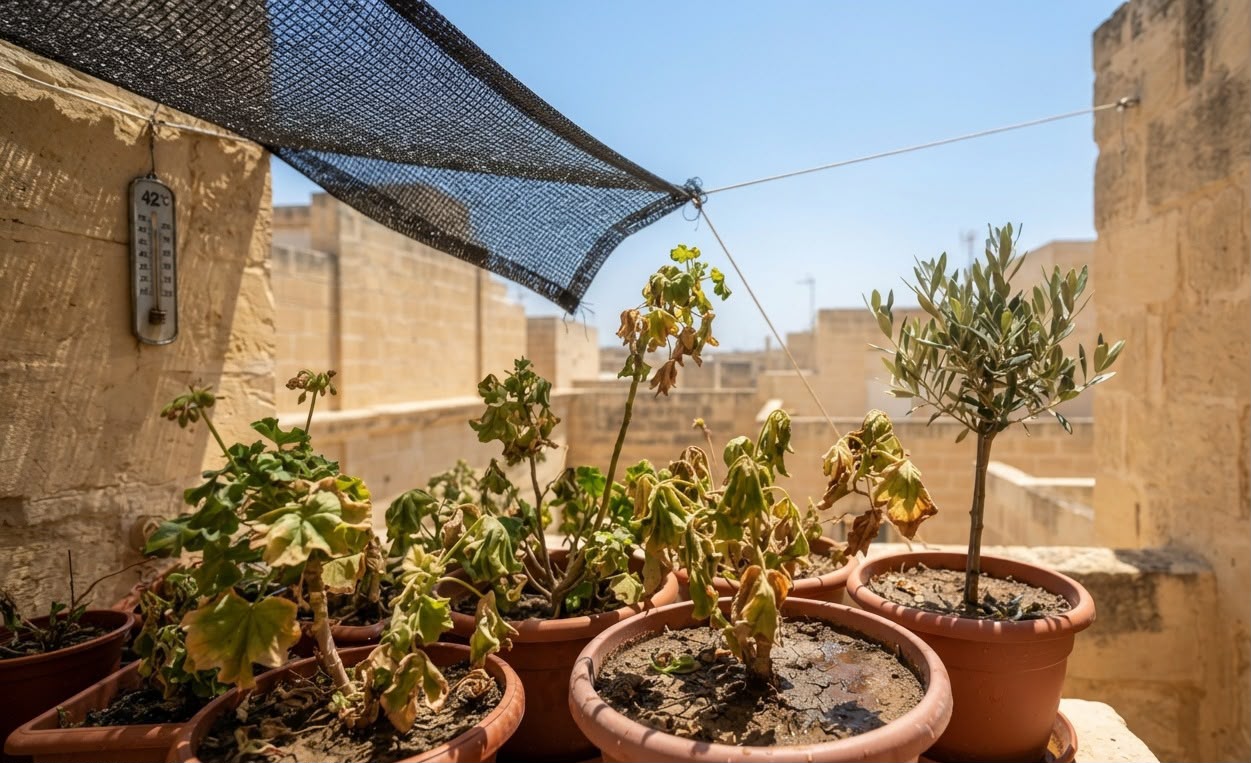
Summer in the Maltese islands has reached a whole new level of demand. Recently, the Malta Meteorological Office has had to issue red and orange alerts due to intense heatwaves driven by an unusual high-pressure pattern known as an Omega Block ($\Omega$). This phenomenon, which traps hot air originating from North Africa over the central Mediterranean, has driven historical temperatures close to 43°C, combined with high nighttime humidity and limestone streets acting as authentic ovens.
If your plants suffered the ravages of these extreme peaks or you are still battling continuous heat alerts exceeding 35°C, this guide shows you the real impact of the current weather and what to do step by step to heal and protect them.
1. The Impact of Extreme Weather: What Happened to Your Plants During the Latest Alerts?
Recent warm air masses and dry winds pulled from the south have subjected vegetation to unprecedented thermal and water stress:
- Nutrient Blockage: With sustained temperatures above 38-42°C, plant leaf stomata close to prevent dehydration. By shutting their "pores," the plant stops transpiring and absorbing nutrients from the soil, causing widespread yellowing (chlorosis).
- The "Frying Pan" Effect on Urban Terraces: In densely built areas of Malta (such as Sliema, Valletta, or stone-surrounded urban cores), terraces accumulate and radiate heat even at night. Small pots literally cook the roots.
- Lightning Dehydration: Dry air and extreme UV radiation (with very high ultraviolet indices) burn leaf tips and wither flowers and buds within hours.
2. Rescue Operation: Saving Plants That Have Already Suffered Damage
If you notice that some of your pots were seriously battered by the latest heatwaves, act with this emergency protocol:
- Deep Immersion Hydration: When soil dries out completely, it becomes water-repellent. Surface watering is not enough. Submerge the entire pot in a container of water for 20 minutes until bubbles stop rising, then let it drain completely.
- Convalescence Shade: Move affected specimens to a cool, well-ventilated spot free from direct sunlight. A bright indoor gallery or a north-facing shaded area will give them the breathing room they need.
- Emergency Hygienic Pruning: Trim completely dry or crispy leaves with sterilized scissors. By removing necrotic tissue, you prevent the plant from wasting useless energy and stop opportunistic fungi attracted by nighttime humidity.
- Fertilizing Prohibited: Do not give in to the temptation of adding fertilizer to "revive" them. The roots are burned and sensitive; fertilizer at this point would act as a lethal toxin.
3. Active Prevention for the Rest of the Maltese Summer
With active weather alerts and thermometers continuously recording high temperatures, prevention is the only wall between your garden and collapse:
- The Critical Watering Schedule: Water strictly at dawn or well into the night (when the stone ground has cooled down). Watering under active sunlight causes water to evaporate instantly and can cause severe burns on the foliage through the magnifying glass effect.
- Create a Group Microclimate: Group your pots together in the coolest corners of the terrace. As plants transpire together, they generate a small humid atmosphere that counters the dry air from the African wind.
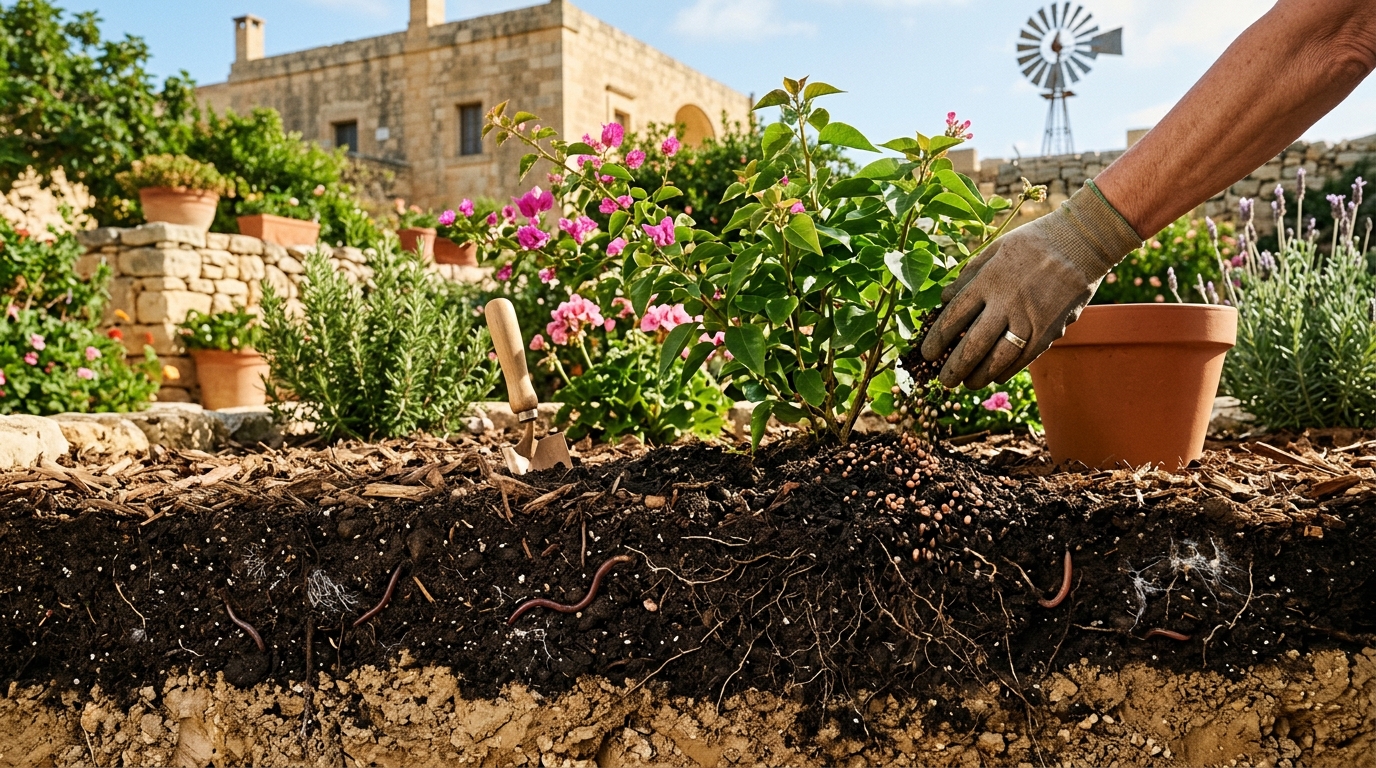
- Mulching Shield: Cover the soil surface of your pots with volcanic gravel, clay pebbles, or bark. This abruptly stops water evaporation and protects roots from the direct high temperatures of Maltese terraces.
- Use Shade Cloths: If you garden on very exposed balconies or rooftops, install a temporary shade cloth (30% to 50% opacity). It will reduce the impact of direct radiation during the hottest days of summer.