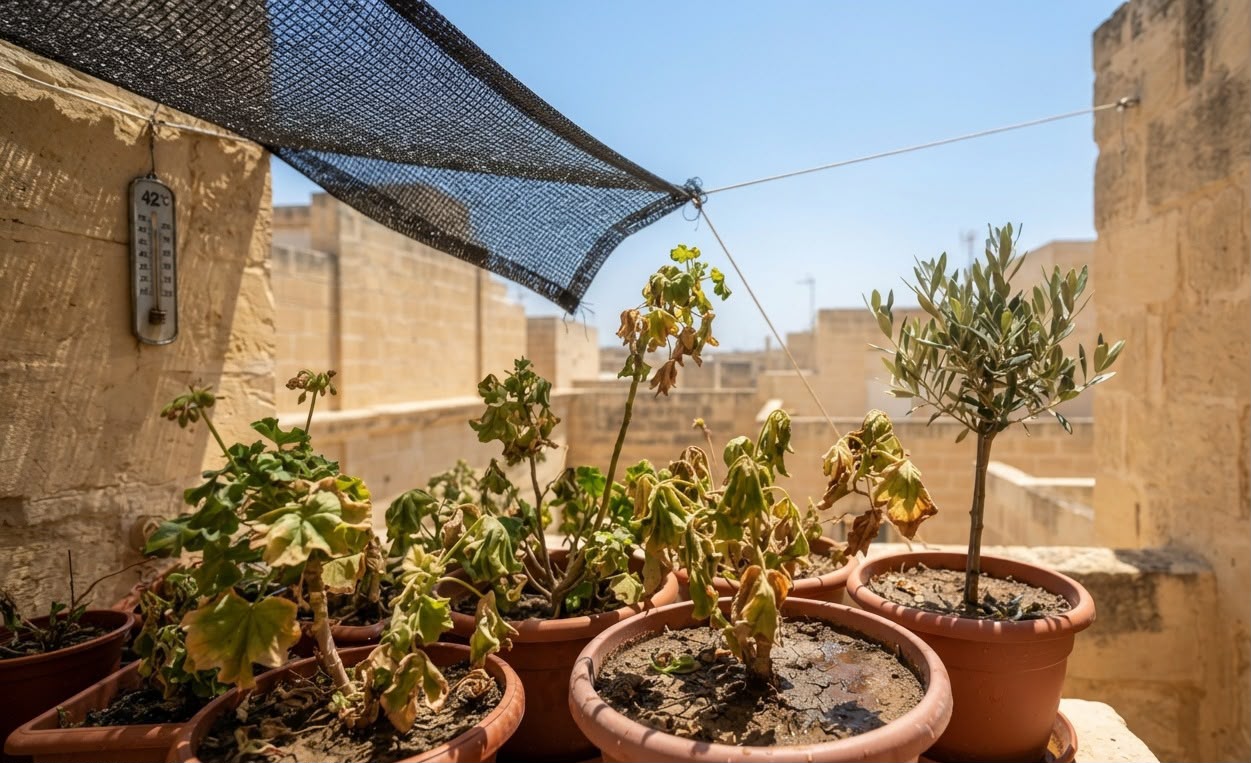
You water your garden regularly. You make sure the plants get enough sunlight. You prune them, clean them and try to give them the care they need. And yet, some plants still struggle.
Leaves lose their colour. Growth slows down. Flowers become less abundant. A plant that looked healthy a few months ago suddenly doesn't seem to be doing as well.
So what is going wrong?
Sometimes, the answer isn't above the ground. It is underneath it.
The soil beneath our gardens
The soil is one of the most overlooked parts of garden care, yet it is where plants obtain many of the nutrients they need to grow. When gardening in Malta, understanding our soil becomes even more important.
Malta's hot and dry climate already creates challenging conditions for plants. Long periods of intense sunlight, high temperatures and limited rainfall can place considerable stress on gardens. At the same time, many Maltese soils are calcareous and alkaline, with relatively low levels of organic matter.
These characteristics matter because a soil can contain nutrients without those nutrients necessarily being readily available to plants.
So while we are giving our plants water, we also need to ask another question: Are we giving them the nutrients they need?
More than water
This is where fertilisation comes into the picture.
Plants require a range of essential nutrients to support everything from leaf and stem development to root growth, flowering and overall plant health. Nitrogen, phosphorus and potassium are among the best-known nutrients, but plants also rely on a range of secondary nutrients and micronutrients.
The important point is that fertilisation should not mean simply adding more fertiliser. The right approach is about understanding what the plant needs, what the soil can provide and what the conditions of the garden are.
And this is particularly important in Malta.
Our gardens experience demanding conditions throughout the year. During summer, heat and drought can increase plant stress, while the characteristics of our soils can influence nutrient availability. Good irrigation is essential, but irrigation alone cannot provide the nutrients that plants require.
This is why healthy garden management needs to look at the bigger picture.
Creating healthier growing conditions
Soil quality, organic matter, irrigation, plant selection and fertilisation all work together.
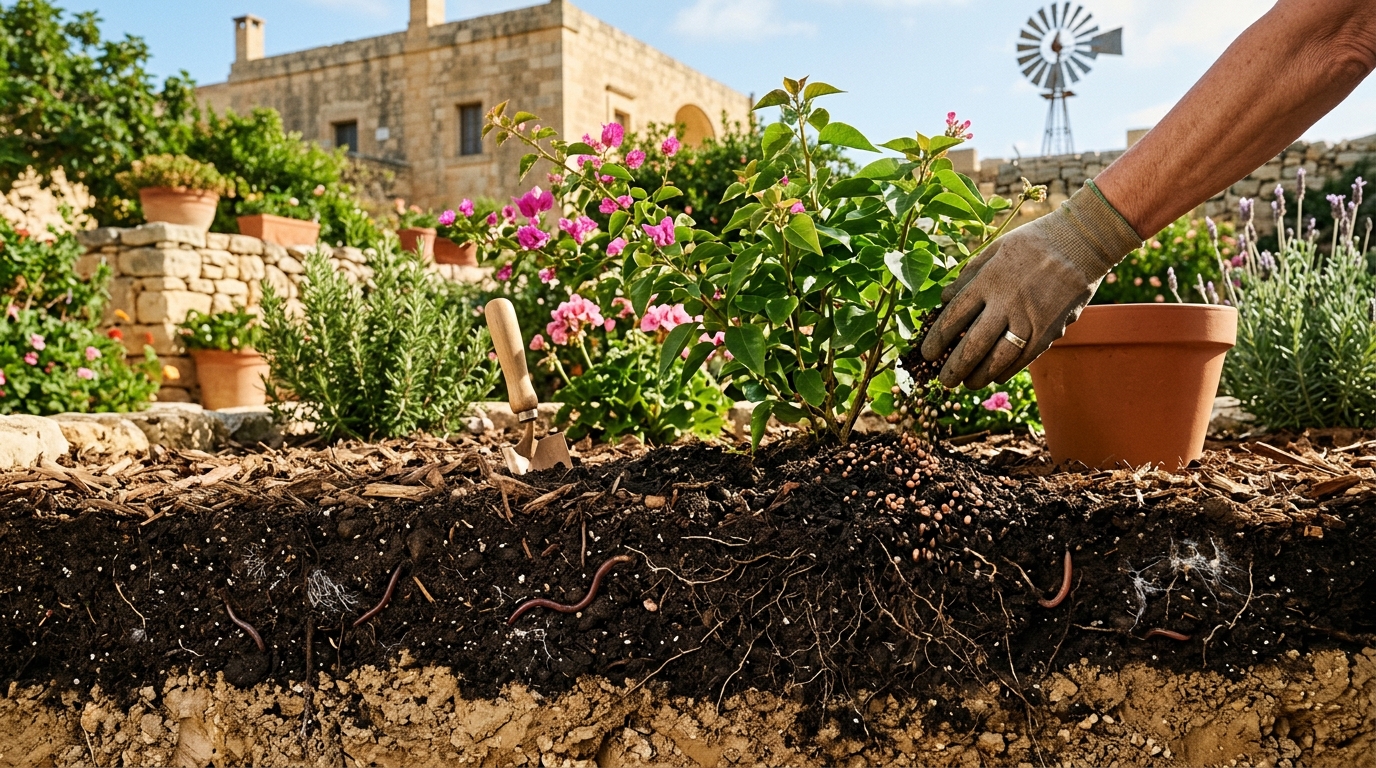
Adding compost or suitable organic matter can help improve soil structure and support moisture retention. Mulching can help protect the soil. Choosing plants suited to Malta's climate can reduce unnecessary stress. And a well-planned fertilisation programme can help provide nutrients when they are needed.
The goal, however, is not simply to keep a garden alive. It is to create the conditions in which it can thrive.
At Derek Garden Centre, this is an important part of how we approach landscaping. Creating a successful landscape means considering the conditions in which plants will grow, rather than focusing only on how the garden looks when it is first completed.
Plant selection, irrigation, soil management and fertilisation are all interconnected. When these elements work together, we can create landscapes that are healthier, more resilient and better suited to Malta's environment.
A beautiful garden is what we see above the ground. But much of its health begins below it.
So the next time you water your garden, take a moment to think beyond the watering can.
Are we giving our plants water to survive, or are we giving them what they need to thrive?
What do you think makes the biggest difference to a healthy garden in Malta: irrigation, soil quality or nutrition?
BY DEREK GARDEN CENTRE
Sources & further reading
- University of Malta — Variations in Soil Organic Matter Content in Cultivated and Uncultivated Calcareous Soils from the Mediterranean Island of Malta (2024).
- University of Malta — The Effect of Sulphur in Soil on the Availability and Uptake of Metal Nutrients.
- Government of Malta — National Agricultural Policy for the Maltese Islands 2018–2028.